

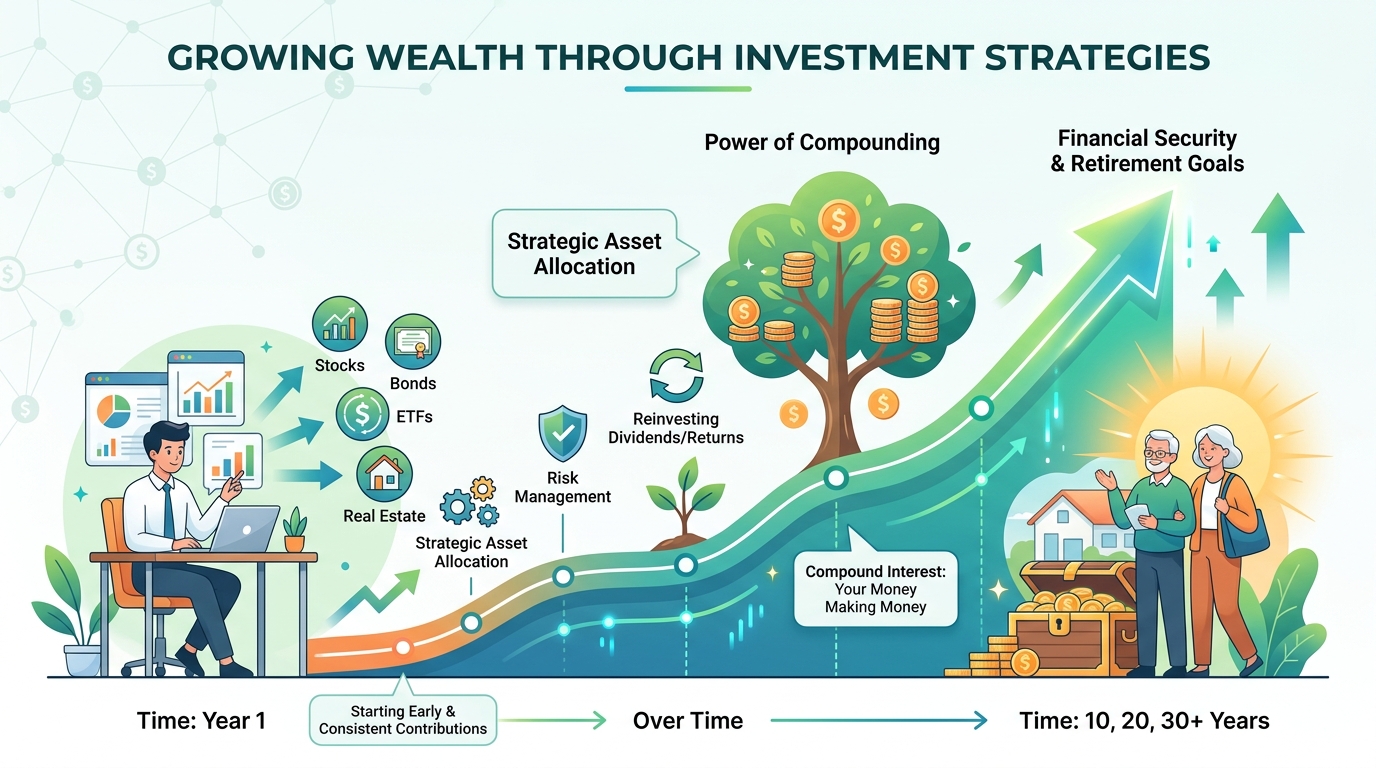
Investment strategies play a crucial role in building and growing wealth over time by helping individuals allocate money wisely, manage risks, and take advantage of financial opportunities. Instead of relying only on savings, smart investing allows money to generate additional income through assets such as stocks, bonds, real estate, and mutual funds. With discipline, patience, and proper planning, investment strategies can create long-term financial stability and help individuals achieve major life goals.
Long Term Wealth Building Approaches
Compounding Growth Benefits
Compounding allows investments to grow exponentially as earnings generate additional earnings over time. This powerful effect helps investors build wealth gradually, especially when investments are held for long periods without frequent withdrawals.
Retirement Planning Strategies
Retirement-focused investing involves setting aside money in structured plans that grow over decades. These strategies ensure financial independence in later life by building a stable income source after active employment ends.
Goal Based Investing
Goal-based investing focuses on achieving specific financial objectives such as buying a home, funding education, or starting a business. Each goal is matched with an appropriate investment timeline and risk level.
Long Term Market Participation
Staying invested in markets for long durations helps reduce the impact of short-term volatility. Long-term participation increases the likelihood of steady returns and wealth accumulation.
Reinvestment of Earnings
Reinvesting dividends and profits allows investors to increase their total returns over time. This strategy strengthens portfolio growth and accelerates wealth creation.
Risk Management and Diversification
Portfolio Diversification Strategy
Diversification spreads investments across different asset classes to reduce risk. This ensures that losses in one area can be balanced by gains in another, improving overall stability.
Asset Allocation Planning
Asset allocation involves dividing investments among stocks, bonds, and other assets based on risk tolerance and financial goals. Proper allocation helps balance risk and reward effectively.
Risk Tolerance Assessment
Understanding personal risk tolerance helps investors choose suitable investment options. It ensures that financial decisions align with comfort levels and long-term objectives.
Market Volatility Protection
Investors use strategies like diversification and hedging to protect portfolios from sudden market fluctuations. This reduces the impact of unpredictable economic changes.
Emergency Fund Integration
Maintaining an emergency fund ensures that investors do not withdraw investments during financial crises, allowing long-term strategies to remain intact.
Stock Market Investment Strategies
Value Investing Approach
Value investing focuses on identifying undervalued stocks with strong fundamentals. Investors aim to buy low-priced assets and hold them until their true value is realized.
Growth Investing Strategy
Growth investing targets companies with high potential for future expansion. These investments may carry higher risk but offer significant long-term returns.
Dividend Income Planning
Dividend investing focuses on stocks that provide regular income through profit sharing. This strategy supports both income generation and long-term capital growth.
Index Fund Investment
Index funds track market indices and offer broad market exposure with lower risk. They are popular for long-term passive investing strategies.
Systematic Investment Plans
Systematic investing involves regular contributions over time, helping investors build wealth steadily while reducing the impact of market timing.
Real Estate and Alternative Investments
Property Investment Growth
Real estate investments generate wealth through property appreciation and rental income. They provide long-term financial security and asset stability.
Rental Income Strategies
Investing in rental properties creates a steady income stream while the property value increases over time, enhancing overall returns.
Real Estate Diversification
Diversifying across residential, commercial, and industrial properties reduces risk and increases investment opportunities in different markets.
Alternative Asset Investment
Alternative investments include commodities, private equity, and collectibles. These assets help diversify portfolios beyond traditional financial markets.
Inflation Protection Assets
Real estate and commodities often act as protection against inflation, preserving purchasing power over time.
Financial Discipline and Planning
Budgeting for Investments
Creating a structured budget ensures consistent investment contributions and prevents overspending. This builds strong financial discipline over time.
Expense Control Methods
Managing unnecessary expenses increases available capital for investment, helping individuals grow wealth more effectively.
Savings to Investment Transition
Converting savings into investments allows money to grow instead of remaining idle, improving long-term financial outcomes.
Financial Goal Tracking
Monitoring financial progress helps investors stay on track and adjust strategies when necessary to achieve targets.
Professional Financial Advice
Seeking expert guidance improves investment decisions and helps individuals avoid common financial mistakes.
Tax Planning and Efficiency
Tax Saving Investments
Certain investment options offer tax benefits, reducing overall tax liability and increasing net returns for investors.
Long Term Capital Gains Strategy
Holding investments for longer periods can reduce tax burdens and increase overall profitability.
Retirement Tax Benefits
Retirement accounts often provide tax advantages that encourage long-term saving and investment growth.
Tax Efficient Asset Allocation
Strategically placing investments in tax-advantaged accounts improves after-tax returns and financial efficiency.
Income Tax Optimization
Proper planning helps minimize taxable income through legal investment strategies and deductions.
Behavioral Finance and Investor Psychology
Emotional Decision Control
Controlling emotions helps investors avoid panic selling during market downturns and maintain long-term strategies.
Patience in Investing
Patience allows investments to mature and benefit from long-term market growth trends.
Market Trend Awareness
Understanding market behavior helps investors make informed decisions and avoid impulsive actions.
Fear and Greed Management
Balancing fear and greed ensures rational investment decisions instead of emotional reactions.
Consistent Investment Habits
Regular investing builds discipline and supports steady wealth accumulation over time.
Why are investment strategies important?
They help individuals grow wealth, manage risks, and achieve financial goals.
What is long-term investing?
It is a strategy focused on holding investments for extended periods to maximize returns.
How does diversification reduce risk?
It spreads investments across assets to minimize losses from market fluctuations.
Is real estate a good investment?
Yes, it provides long-term appreciation and rental income opportunities.
What is the safest investment strategy?
Balanced and diversified portfolios with long-term planning are generally considered safer.
Conclusion
Investment strategies are essential for building long-term wealth because they help individuals manage risk, grow capital, and achieve financial goals systematically. Through disciplined planning, diversification, and patience, investors can take advantage of compounding growth and market opportunities. With the right approach, investment strategies create financial stability and ensure a stronger and more secure economic future over time.