

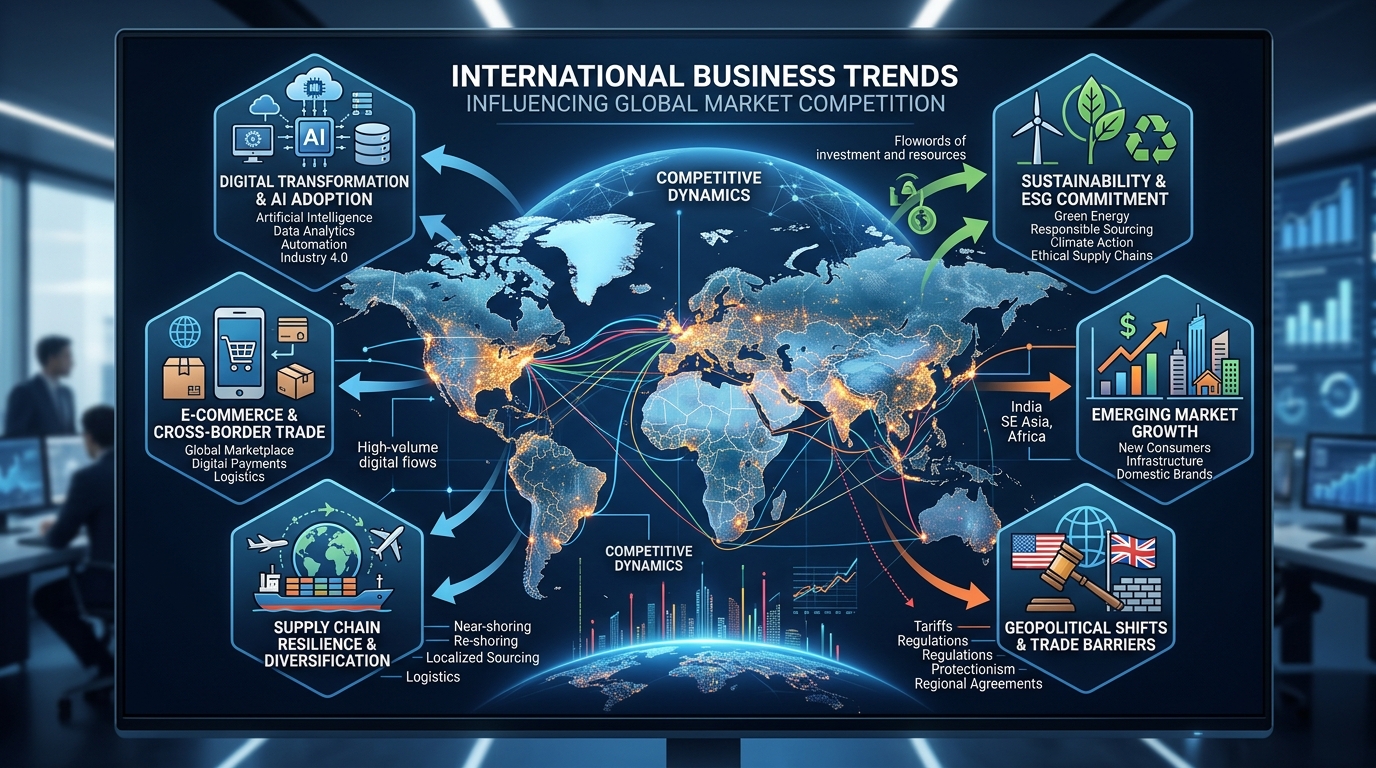
International business trends are significantly influencing global market competition by changing how companies operate, innovate, and connect with customers across different regions. Businesses today compete not only through pricing and products but also through technology adoption, sustainability practices, digital transformation, and global partnerships. As markets become more interconnected, organizations must quickly adapt to changing consumer demands, economic conditions, and technological advancements to maintain competitiveness and achieve long-term growth in the international business environment.
Digital Transformation In Global Business
E Commerce Market Expansion
Online shopping platforms continue expanding across international markets, allowing businesses to reach customers globally without physical limitations. Companies use digital stores, mobile applications, and secure payment systems to improve accessibility, increase sales opportunities, and strengthen competitive positioning in highly connected global economies today.
Artificial Intelligence Integration
Businesses worldwide are integrating artificial intelligence into operations to improve automation, customer service, and decision-making processes. AI technologies help companies analyze data faster, reduce operational costs, and increase efficiency while creating smarter and more personalized customer experiences across global markets and industries.
Cloud Computing Adoption
Cloud computing allows businesses to manage data, software, and operations through internet-based systems instead of traditional infrastructure. This technology improves flexibility, reduces expenses, and supports global collaboration between teams and organizations operating in different countries and markets worldwide efficiently and securely.
Digital Payment Innovations
Advanced digital payment systems are transforming international trade and consumer transactions. Businesses now offer secure online payment options, mobile wallets, and contactless solutions to improve convenience and customer trust while supporting faster financial operations in competitive global marketplaces and expanding digital economies worldwide.
Data Analytics Decision Systems
Companies increasingly rely on data analytics to understand customer behavior, predict market trends, and improve business strategies. Real-time insights help organizations make informed decisions, optimize operations, and maintain competitiveness in rapidly evolving international business environments across industries and regions globally.
| Business Trend | Main Benefit | Market Impact |
|---|---|---|
| AI Integration | Automation | Efficiency growth |
| E-commerce | Global reach | Increased competition |
| Cloud Computing | Flexibility | Faster operations |
Sustainability And Green Business Practices
Eco Friendly Production Methods
Businesses are adopting environmentally friendly manufacturing methods to reduce pollution and conserve resources. Sustainable production improves brand reputation, attracts environmentally conscious consumers, and supports long-term operational efficiency in global markets increasingly focused on environmental responsibility and climate awareness initiatives worldwide.
Renewable Energy Investments
Companies are investing in solar, wind, and renewable energy systems to reduce operational costs and environmental impact. These investments support sustainability goals while improving energy security and helping organizations meet international environmental standards and regulations across competitive industries globally and regionally.
Sustainable Supply Chain Systems
Organizations are developing sustainable supply chains that focus on ethical sourcing, waste reduction, and environmentally responsible transportation methods. These systems improve operational transparency and strengthen customer trust while supporting long-term environmental and business sustainability in global trade and manufacturing sectors worldwide effectively.
Corporate Social Responsibility Programs
Businesses now prioritize social responsibility programs supporting communities, education, healthcare, and environmental initiatives. CSR activities improve public image, strengthen customer loyalty, and enhance company reputation in competitive international markets increasingly influenced by ethical business practices and sustainable development goals globally today.
Green Consumer Product Demand
Consumers worldwide increasingly prefer products that are environmentally friendly and sustainably produced. Businesses respond by creating eco-conscious products and packaging solutions to meet market demand while improving competitive positioning in industries influenced by sustainability awareness and changing consumer preferences internationally and regionally.
Global Supply Chain Developments
Smart Logistics Technologies
Advanced logistics systems use automation, tracking software, and AI technologies to improve transportation efficiency and delivery accuracy. Businesses optimize global supply chains to reduce costs, improve reliability, and maintain competitiveness in fast-moving international markets and rapidly growing e-commerce industries worldwide consistently.
Supplier Diversification Strategies
Companies diversify supplier networks across different countries to reduce dependency risks and improve operational stability. Multiple sourcing strategies help businesses manage disruptions, maintain production continuity, and strengthen resilience in uncertain global economic conditions and international trade environments today effectively and strategically.
Inventory Management Automation
Automated inventory systems improve stock control, reduce waste, and ensure product availability in global markets. Businesses use digital technologies to track inventory levels in real time, enhancing operational efficiency and customer satisfaction across international supply chain networks and competitive retail industries worldwide significantly.
Real Time Shipment Tracking
Modern tracking technologies allow businesses and consumers to monitor shipments instantly across global transportation networks. Real-time visibility improves supply chain transparency, delivery accuracy, and customer confidence while supporting efficient logistics management in international trade and distribution operations globally today successfully.
Cost Optimization Techniques
Organizations continue implementing cost optimization strategies in manufacturing, transportation, and logistics operations to improve profitability. Efficient cost management helps businesses remain competitive in international markets affected by fluctuating economic conditions and increasing operational expenses worldwide and across multiple industries consistently.
Technology Driven Consumer Behavior
Mobile Commerce Growth
Consumers increasingly use smartphones and mobile applications for shopping, banking, and service access. Businesses optimize mobile platforms to improve customer experiences and capture growing digital market opportunities in competitive international economies and technology-driven consumer environments globally today successfully and efficiently.
Social Media Marketing Expansion
Social media platforms have become essential marketing tools for businesses worldwide. Companies use targeted advertising, influencer collaborations, and digital campaigns to engage customers, strengthen brand awareness, and drive sales growth in highly competitive international consumer markets and rapidly evolving online communities globally.
Personalized Customer Experiences
Businesses use customer data and AI technologies to deliver personalized recommendations and services. Customized experiences improve customer satisfaction, loyalty, and engagement while helping organizations stand out in increasingly competitive global marketplaces and digitally connected business environments internationally and regionally across multiple sectors.
Online Brand Reputation Management
Companies closely monitor online reviews, social media discussions, and digital feedback to protect brand reputation. Positive online presence influences customer trust and purchasing decisions, making reputation management a critical strategy in modern international business competition and digital consumer engagement worldwide today consistently.
Subscription Based Business Models
Subscription services are becoming popular across industries including entertainment, software, education, and retail. Businesses benefit from recurring revenue streams while consumers enjoy convenience and flexible access to products and services in digitally connected global economies and competitive international marketplaces today effectively and rapidly.
International Trade And Investment Trends
Cross Border Investment Growth
Global investors continue funding international businesses and emerging markets to expand economic opportunities and strengthen market presence. Cross-border investments increase innovation, job creation, and economic development while supporting business expansion in competitive international industries and financial systems globally and regionally today strategically.
Free Trade Agreement Expansion
Countries establish free trade agreements to reduce tariffs and encourage economic cooperation between nations. These agreements improve international market access, increase exports, and strengthen business competitiveness across global industries and interconnected economic regions worldwide consistently and efficiently through collaborative trade policies and frameworks.
Emerging Market Opportunities
Businesses increasingly target emerging economies with growing populations and rising consumer demand. Expanding into these markets provides growth opportunities while increasing competition among international companies seeking market share and long-term profitability across rapidly developing global regions and economies today significantly and strategically.
Currency Exchange Management
Fluctuating exchange rates influence international trade, pricing strategies, and business profitability. Companies use financial planning and hedging strategies to reduce currency risks and maintain stability in global operations and competitive cross-border business activities worldwide effectively and consistently in changing economic conditions.
Foreign Direct Investment Strategies
Organizations invest directly in overseas markets by establishing factories, offices, or partnerships to strengthen international presence. FDI supports economic development, technology transfer, and global business expansion while increasing market competition and industrial growth across regions worldwide today strategically and effectively.
Workforce And Employment Evolution
Remote Work Expansion
Remote working models allow companies to hire global talent and reduce operational costs. Businesses use digital collaboration tools to maintain productivity while supporting flexible work environments and international workforce management in modern competitive industries worldwide successfully and efficiently through technology integration and communication systems.
Global Talent Recruitment
Organizations recruit skilled professionals from different countries to improve innovation and expertise. Access to international talent strengthens competitiveness and helps businesses adapt to changing market demands and technological advancements in global industries and evolving business environments worldwide today effectively and strategically.
Employee Skill Development Programs
Businesses invest in training programs to improve employee skills in technology, leadership, and digital operations. Continuous learning supports innovation and prepares organizations for future business challenges in competitive international markets and rapidly changing economic conditions globally and regionally across industries today successfully.
Workplace Diversity Initiatives
Diverse workplaces encourage creativity, innovation, and stronger decision-making processes. Companies promote inclusive work environments to improve collaboration and attract talent from different cultural backgrounds across international business operations and global organizational systems worldwide today effectively and consistently in competitive industries.
Automation And Job Transformation
Automation technologies are changing traditional job roles while creating demand for advanced digital skills. Businesses adapt workforce strategies to balance automation benefits with employee development and future employment opportunities in evolving global industries and technology-driven business environments internationally and regionally today strategically and successfully.
Future Of Global Market Competition
Artificial Intelligence Business Expansion
AI technologies will continue transforming industries through advanced automation, predictive analytics, and intelligent decision-making systems. Businesses adopting AI innovations early will gain significant competitive advantages in future global markets and rapidly evolving international economic environments worldwide successfully and strategically over time.
Sustainable Economic Development
Sustainability will remain a central focus for businesses seeking long-term growth and customer trust. Organizations integrating environmentally responsible practices will strengthen competitiveness and support global economic stability in future international business systems and environmentally conscious consumer markets worldwide consistently and effectively.
Smart Manufacturing Systems
Advanced manufacturing technologies including robotics, AI, and IoT will improve production efficiency and product quality. Smart factories will become essential for maintaining competitiveness in future global industrial markets and rapidly evolving technology-driven business environments internationally and regionally today strategically and efficiently.
Digital Economy Integration
The digital economy will continue expanding through online services, virtual platforms, and digital financial systems. Businesses embracing digital integration will strengthen market presence and customer engagement while increasing competitiveness in future global economic systems and interconnected international industries worldwide successfully and rapidly.
Innovation Driven Business Models
Continuous innovation will become essential for business survival and market leadership. Companies investing in research, creativity, and technological advancement will shape future global competition and economic development across industries and international markets worldwide effectively and strategically in evolving business environments and economies.
What are international business trends?
International business trends are global changes influencing trade, technology, consumer behavior, and market competition.
Why is digital transformation important for businesses?
Digital transformation improves efficiency, customer experience, and competitiveness in global markets.
How does sustainability affect global business?
Sustainability improves brand reputation, supports environmental goals, and attracts conscious consumers.
What role does AI play in international business?
AI supports automation, analytics, customer service, and operational efficiency across industries.
What is the future of global market competition?
Future competition will focus on innovation, digital integration, AI technologies, and sustainable growth.
International business trends are reshaping global market competition by driving innovation, digital transformation, and sustainable growth strategies across industries. Businesses that adapt to evolving technologies, changing consumer behavior, and international economic conditions are better positioned for long-term success. As globalization and technological advancement continue accelerating, global competition will become increasingly dynamic, interconnected, and innovation-focused in the future economy.