

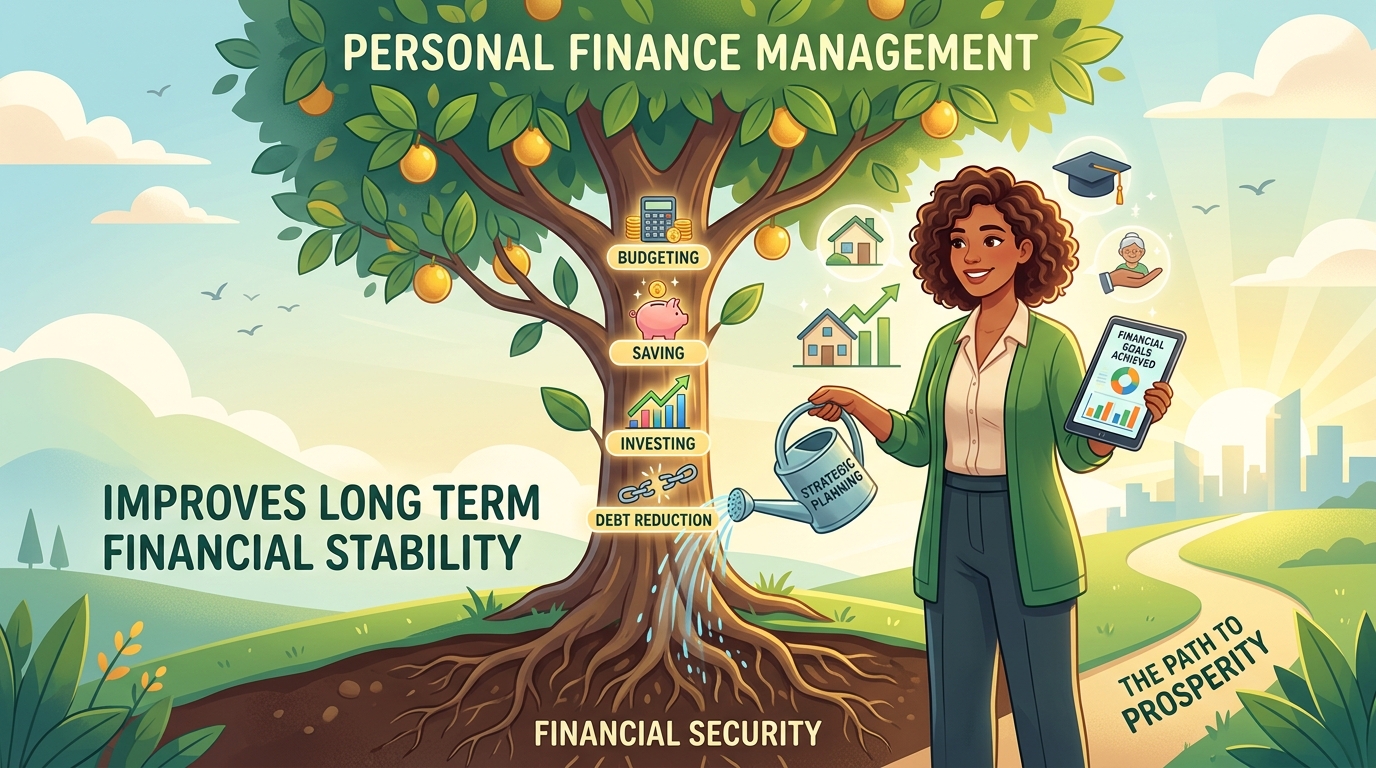
Personal finance management plays a crucial role in building long-term financial stability by helping individuals control their income, expenses, savings, and investments in a structured way. In today’s fast-changing economic environment, people face rising living costs, unexpected emergencies, and complex financial choices. Effective money management ensures that individuals are prepared for the future, avoid unnecessary debt, and gradually build wealth. It is not just about earning money, but about making smart financial decisions that create security, independence, and peace of mind over time.
Budgeting And Expense Control
Monthly Income Planning
Monthly income planning helps individuals allocate their earnings efficiently across essential needs, savings, and discretionary spending. It ensures that money is used wisely and prevents overspending. A well-structured plan creates financial discipline and supports long-term stability by maintaining control over cash flow and financial priorities.
Expense Tracking Systems
Tracking daily expenses allows individuals to understand where their money is going. This awareness helps identify unnecessary spending and improve financial habits. By monitoring expenses regularly, people can make better financial decisions and maintain a balanced lifestyle that supports savings and stability.
Needs Versus Wants Analysis
Distinguishing between needs and wants is essential for smart financial management. Needs include essential expenses like food and housing, while wants are non-essential purchases. Understanding this difference helps individuals prioritize spending and avoid financial stress caused by impulsive buying habits.
Budget Adjustment Strategies
Financial situations change over time, so budgets must be adjusted accordingly. Regularly reviewing and modifying budgets ensures that individuals stay on track with their financial goals. This flexibility helps maintain stability even during income fluctuations or unexpected expenses.
Emergency Expense Planning
Planning for emergencies is a key part of budgeting. Setting aside funds for unexpected situations such as medical expenses or job loss prevents financial crises. Emergency planning strengthens financial resilience and reduces dependency on loans or credit.
| Budget Element | Purpose | Financial Benefit |
|---|---|---|
| Income planning | Money allocation | Stability |
| Expense tracking | Spending control | Awareness |
| Emergency fund | Risk protection | Security |
Saving Habits For Future Security
Regular Savings Discipline
Consistently saving a portion of income builds financial security over time. This habit ensures that individuals gradually accumulate funds for future needs and reduce financial stress.
Short Term Savings Goals
Short-term savings help individuals prepare for planned expenses such as travel, education, or purchases. These goals improve financial organization and reduce reliance on credit.
Long Term Wealth Building
Long-term savings focus on retirement, property, and investment growth. This approach ensures financial independence and stability in later years.
Automated Savings Systems
Automating savings transfers helps maintain consistency without manual effort. This system ensures that saving becomes a priority rather than an afterthought.
Inflation Protection Planning
Savings must be protected against inflation through smart financial planning. Choosing appropriate savings instruments helps maintain purchasing power over time.
Investment Strategies For Growth
Stock Market Participation
Investing in stocks allows individuals to grow wealth over time through capital appreciation and dividends. It involves risk but offers long-term financial growth opportunities.
Mutual Fund Investments
Mutual funds provide diversified investment options managed by professionals. They reduce risk and make investing accessible for beginners.
Real Estate Investment Growth
Property investment offers long-term value appreciation and rental income. It is a stable asset class for wealth building.
Retirement Planning Accounts
Retirement accounts help individuals secure financial independence after employment years. Regular contributions ensure future stability.
Risk Diversification Methods
Diversifying investments across different assets reduces financial risk and improves overall returns.
Debt Management And Financial Control
Credit Card Usage Control
Responsible use of credit cards prevents debt accumulation and improves financial discipline. Controlled usage avoids high-interest burdens.
Loan Repayment Planning
Structured repayment plans ensure timely debt clearance and reduce financial stress. This improves credit health.
Interest Rate Awareness
Understanding interest rates helps individuals choose better loan options and reduce long-term repayment costs.
Debt Reduction Strategies
Systematic debt reduction methods like prioritizing high-interest loans improve financial stability and freedom.
Credit Score Improvement
Maintaining a good credit score helps access better financial opportunities and lower interest rates.
Income Growth And Career Planning
Skill Development Investment
Investing in skills improves earning potential and career growth. It increases financial stability over time.
Multiple Income Streams
Creating additional income sources reduces financial dependency and increases financial security.
Career Advancement Planning
Strategic career planning helps individuals achieve promotions and salary growth, improving long-term income stability.
Freelancing Opportunities
Freelancing provides flexible income options and supports financial independence.
Entrepreneurship Development
Starting a business can significantly increase income potential and long-term wealth creation.
Financial Planning For Life Goals
Education Funding Planning
Saving for education ensures access to quality learning without financial burden.
Home Ownership Planning
Financial planning helps individuals purchase property and build long-term assets.
Retirement Security Planning
Retirement planning ensures financial independence and stable living after employment.
Family Financial Protection
Insurance and savings protect families from unexpected financial risks.
Wealth Transfer Planning
Proper planning ensures smooth transfer of assets to future generations.
Financial Literacy And Awareness
Money Management Education
Learning financial basics helps individuals make better money decisions.
Investment Knowledge Building
Understanding investments reduces risk and improves financial growth opportunities.
Financial Tools Usage
Using budgeting apps and financial tools improves money tracking and planning.
Economic Awareness Development
Staying informed about economic trends helps improve financial decision-making.
Smart Spending Habits
Developing disciplined spending habits ensures long-term financial stability.
What is personal finance management?
It is the process of managing income, expenses, savings, and investments effectively.
Why is financial planning important?
It helps individuals achieve financial stability and avoid unnecessary debt.
How can I improve my savings habits?
By setting goals, automating savings, and controlling expenses.
What are the benefits of investing?
Investing helps grow wealth and secure long-term financial future.
How does budgeting help financially?
Budgeting controls spending and ensures better financial organization.
Personal finance management is essential for achieving long-term financial stability because it helps individuals control spending, build savings, and grow wealth through informed decisions. By practicing budgeting, investing wisely, and managing debt effectively, people can secure their financial future and reduce uncertainty. Strong financial habits create independence, resilience, and lasting security in an ever-changing economic world.