

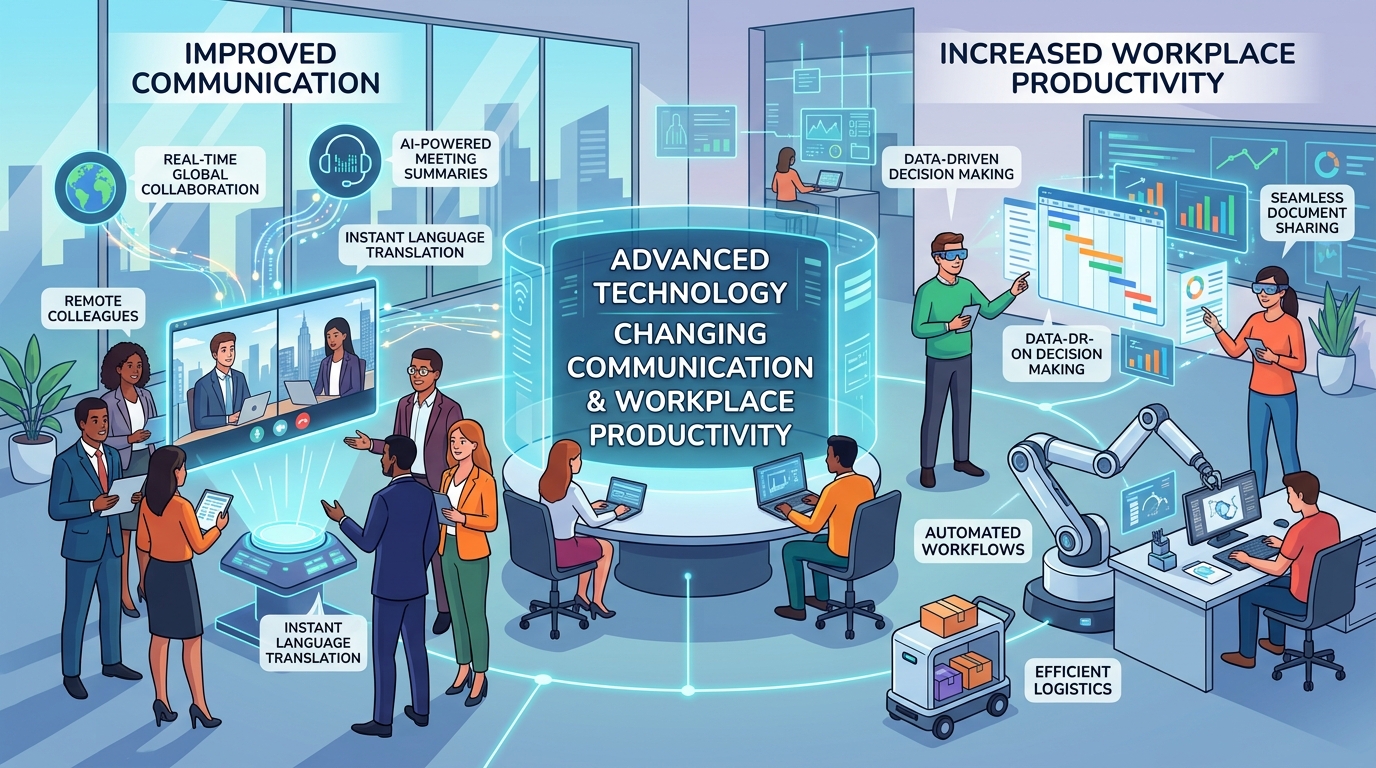
Advanced technology is transforming communication and workplace productivity across industries worldwide. Digital tools, artificial intelligence, cloud platforms, and automation systems are changing how employees interact, collaborate, and complete tasks. Modern workplaces now rely heavily on technology to improve efficiency, reduce operational delays, and support remote and hybrid work environments in an increasingly connected global economy.
Digital Communication Technologies
Instant Messaging Platforms
Instant messaging tools allow employees to communicate quickly and efficiently in real time. These platforms improve teamwork, reduce delays, and support faster decision-making within organizations. Businesses rely on messaging systems to maintain continuous communication between departments and remote teams worldwide daily.
Video Conferencing Systems
Video conferencing technology enables virtual meetings and remote collaboration from different locations. It reduces travel costs, improves communication efficiency, and supports global teamwork. Businesses use these systems to connect employees, clients, and partners instantly regardless of geographic distance or time zone limitations.
Cloud-Based Communication Tools
Cloud communication platforms allow employees to access messages, files, and applications online from any device. This flexibility improves collaboration and productivity while supporting hybrid and remote work environments. Businesses benefit from secure and scalable communication systems that operate efficiently across multiple locations globally.
Unified Communication Platforms
Unified communication systems combine messaging, video calls, emails, and collaboration tools into one platform. This integration improves workflow efficiency, reduces communication gaps, and simplifies workplace interactions. Employees can manage multiple communication channels through a single centralized system, improving organizational productivity and coordination significantly.
Voice Recognition Technology
Voice recognition systems convert spoken words into digital text or commands. These tools improve accessibility, increase speed in documentation, and support hands-free workplace operations. Businesses use voice technology for customer service, transcription, and productivity improvements in modern professional environments effectively.
Artificial Intelligence in Workplace Productivity
AI Task Automation
Artificial intelligence automates repetitive tasks such as scheduling, data entry, and reporting. This reduces manual workload and allows employees to focus on strategic and creative responsibilities. Automation improves operational efficiency while minimizing errors and increasing productivity in fast-paced workplace environments across industries globally.
Smart Virtual Assistants
Virtual assistants powered by AI help employees manage tasks, reminders, and communication more efficiently. They provide quick access to information, schedule meetings, and support workflow management. Businesses use virtual assistants to improve organization and reduce administrative workload significantly in daily operations and professional activities.
Predictive Analytics Systems
Predictive analytics tools analyze historical and real-time data to forecast trends and outcomes. Businesses use these systems to improve decision-making, optimize resources, and identify potential opportunities or risks. Accurate predictions support strategic planning and increase productivity across organizational departments and business operations effectively.
AI-Powered Customer Support
AI customer support systems provide instant responses to customer inquiries through chatbots and automated platforms. These systems improve service speed, reduce operational costs, and enhance customer satisfaction. Businesses benefit from twenty-four-hour support capabilities while employees focus on more complex customer-related tasks and strategic activities.
Intelligent Workflow Management
AI-driven workflow systems organize tasks, prioritize responsibilities, and monitor project progress automatically. These tools improve coordination, reduce delays, and enhance team collaboration. Businesses achieve better productivity and operational efficiency through intelligent task management and streamlined digital workplace processes effectively.
Remote and Hybrid Work Transformation
Flexible Work Environments
Technology enables flexible work arrangements by allowing employees to work remotely or in hybrid models. This improves work-life balance, reduces commuting stress, and increases employee satisfaction while maintaining productivity and business continuity across modern organizations globally and efficiently through digital connectivity systems.
Remote Collaboration Platforms
Collaboration platforms allow teams to share files, manage projects, and communicate effectively from different locations. These tools support teamwork, improve coordination, and ensure smooth workflow management in distributed work environments and global business operations without geographical limitations or communication barriers.
Digital File Sharing Systems
Cloud-based file-sharing systems enable employees to access and exchange documents securely in real time. This improves collaboration, reduces paperwork, and ensures version control in professional environments. Businesses rely on digital sharing tools for efficient communication and seamless information management across teams and departments.
Virtual Team Management
Technology supports virtual team management through project tracking tools, communication systems, and performance monitoring platforms. Managers can supervise remote employees effectively, ensuring accountability, collaboration, and productivity within distributed workforce structures and modern digital workplaces operating across multiple regions and international markets globally.
Employee Productivity Monitoring
Digital productivity monitoring tools track employee performance, task completion, and work efficiency. Businesses use these systems to optimize workflow management and identify improvement opportunities. Monitoring technology helps organizations maintain productivity standards in both remote and office-based working environments effectively and consistently over time.
Cloud Computing and Workplace Efficiency
Cloud Storage Accessibility
Cloud storage allows employees to access business files and data securely from anywhere with internet connectivity. This flexibility improves collaboration, reduces dependency on physical storage devices, and enhances workplace productivity by enabling efficient information sharing across teams and departments globally in real-time environments.
Software-as-a-Service Platforms
SaaS platforms provide online access to business applications without requiring local installation or maintenance. These systems improve operational efficiency, reduce IT costs, and support scalable workplace solutions. Businesses use SaaS tools for communication, accounting, project management, and customer relationship management across digital operations.
Real-Time Data Synchronization
Cloud systems synchronize data instantly across multiple devices and users. Employees always access updated information, improving coordination and reducing communication errors. Real-time synchronization supports efficient collaboration and decision-making within modern workplaces and digitally connected business environments operating across different locations worldwide effectively.
Disaster Recovery Solutions
Cloud-based disaster recovery systems protect organizational data by creating automatic backups and recovery plans. Businesses can restore information quickly after cyberattacks, hardware failures, or natural disasters. These solutions improve operational continuity and reduce downtime in modern digital workplace environments and enterprise systems globally.
Scalable Business Infrastructure
Cloud computing provides scalable infrastructure that grows according to organizational needs. Businesses can increase storage, computing power, and digital resources without major hardware investments. This flexibility supports expansion, improves efficiency, and reduces operational costs in modern technology-driven workplaces and competitive global business environments.
Cybersecurity and Digital Safety
Data Protection Systems
Advanced security systems protect sensitive business information from cyber threats and unauthorized access. Encryption, firewalls, and monitoring tools help organizations maintain data privacy and operational security. Strong protection systems are essential for modern workplaces relying heavily on digital communication and cloud-based technologies globally today.
Multi-Factor Authentication
Multi-factor authentication adds additional security layers by requiring multiple verification methods for account access. This reduces the risk of unauthorized entry and improves workplace cybersecurity. Businesses implement these systems to protect employee accounts, customer information, and organizational data from increasing digital threats and cyberattacks.
Cyber Threat Monitoring
Cybersecurity monitoring tools detect suspicious activities and potential attacks in real time. Businesses use these systems to identify vulnerabilities, respond quickly to threats, and prevent data breaches. Continuous monitoring improves digital safety and protects workplace operations from evolving cybersecurity risks and malicious online activities effectively.
Secure Remote Access
Secure remote access systems allow employees to connect safely to organizational networks from external locations. Virtual private networks and encryption technologies protect communication and data transfer. Businesses rely on secure access tools to support remote work while maintaining cybersecurity standards and operational efficiency globally.
Employee Cybersecurity Training
Organizations provide cybersecurity training to educate employees about phishing, password safety, and online threats. Well-informed employees reduce the risk of security breaches caused by human error. Continuous training improves digital awareness and strengthens workplace protection against cyberattacks and information security risks effectively over time.
Technology and Employee Collaboration
Project Management Applications
Project management tools help teams organize tasks, assign responsibilities, and track project progress efficiently. These applications improve communication, reduce confusion, and support timely project completion in collaborative workplace environments and modern business operations involving multiple departments and distributed professional teams globally.
Shared Digital Workspaces
Shared digital workspaces allow employees to collaborate on documents, presentations, and projects simultaneously in real time. This improves teamwork, reduces delays, and increases productivity. Businesses use digital collaboration platforms to support innovation and communication within modern technology-driven workplaces effectively and consistently across organizational operations.
Team Communication Channels
Dedicated communication channels help employees exchange updates, discuss projects, and solve problems quickly. Organized communication improves workflow efficiency and reduces misunderstandings in professional environments. Businesses benefit from stronger collaboration and faster decision-making through structured digital communication systems and advanced workplace technologies globally today.
Knowledge Sharing Platforms
Knowledge-sharing platforms store organizational information, training materials, and expertise for employee access. These systems improve learning, support collaboration, and preserve institutional knowledge. Businesses enhance productivity by enabling employees to access important resources and information quickly through centralized digital platforms and communication technologies effectively.
Cross-Department Collaboration
Technology enables departments to collaborate more efficiently through shared systems and communication platforms. Teams can coordinate tasks, exchange ideas, and solve problems together regardless of location. This improves organizational productivity, innovation, and operational efficiency in modern digitally connected workplaces and global business environments worldwide today.
Future of Workplace Technology
Artificial Intelligence Expansion
Artificial intelligence will continue transforming workplaces through advanced automation, predictive systems, and intelligent decision-making tools. Businesses will increasingly rely on AI to improve efficiency, reduce operational costs, and support innovation across multiple industries and professional environments globally in the coming years and future economies.
Augmented Reality Workspaces
Augmented reality technologies will create immersive workplace experiences for training, design, and collaboration. Employees will interact with digital information in physical environments, improving productivity and communication. Businesses are expected to adopt AR tools for more interactive and efficient workplace operations and professional learning systems globally.
Internet of Things Integration
The Internet of Things will connect workplace devices, equipment, and systems through smart networks. This integration will improve monitoring, automation, and operational efficiency. Businesses will use connected technologies to enhance productivity, reduce maintenance costs, and optimize workplace management processes in digitally advanced environments worldwide.
Advanced Automation Systems
Future automation systems will handle increasingly complex tasks with minimal human intervention. Businesses will benefit from higher efficiency, reduced errors, and faster operations. Advanced automation will transform industries by improving productivity and reshaping traditional workplace roles and organizational structures in the evolving digital economy globally.
Global Digital Work Ecosystems
Future workplaces will operate within interconnected global digital ecosystems that combine communication, collaboration, cloud computing, and AI technologies. These systems will enable seamless international teamwork, improve productivity, and support business growth in highly connected and technology-driven professional environments across industries worldwide in modern economies.
Conclusion
Advanced technology is revolutionizing communication and workplace productivity by improving collaboration, automation, and operational efficiency across industries. Digital tools, artificial intelligence, cloud systems, and cybersecurity solutions are transforming how employees work and interact globally. As innovation continues advancing, technology will remain essential for building smarter, more flexible, and highly productive workplaces in the future digital economy.